
Quick Answer
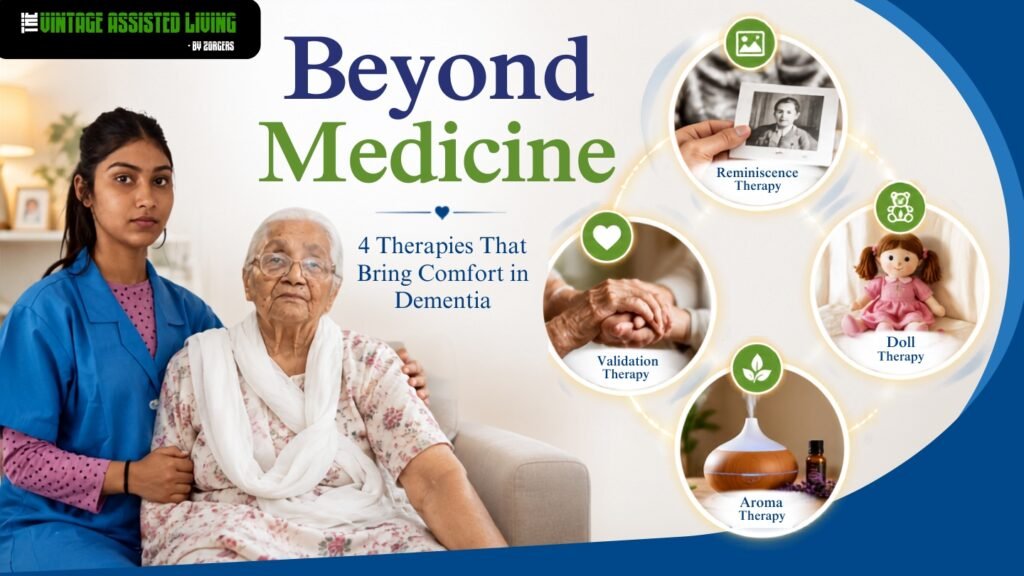
When someone you love has dementia, medication isn’t always the answer and honestly, it shouldn’t always be the first one. Approaches like validation therapy, reminiscence therapy, doll therapy, and aroma therapy give caregivers another way in: they calm agitation, ease anxiety, and support emotional wellbeing without the side effects that come with pills. The idea behind all of them is simple step into the person’s reality instead of pulling them out of it. That’s why these methods have become such a core part of memory care and assisted living today.
Table of Contents
- Why Non-Drug Therapies Matter in Dementia Care
- Validation Therapy
- Reminiscence Therapy
- Doll Therapy
- Aroma Therapy
- Comparing the Four Therapies
- Choosing the Right Therapy
- Frequently Asked Questions
Why Non-Drug Therapies Matter in Dementia Care
Anyone caring for a person with dementia knows the harder moments the agitation, the anxious pacing, the same question asked for the tenth time, the resistance when it’s time for a bath or a meal. It’s exhausting, and it’s easy to reach for medication as the quickest fix. But sedatives and antipsychotics come with real risks for older adults more falls, more grogginess, sometimes even faster cognitive decline.
Non-drug therapies take a different route. Rather than shutting a behaviour down, they try to understand what’s actually driving it is it fear, boredom, loneliness, a need to feel useful again? At The Vintage Club’s dementia and Alzheimer’s care home in Mohali, this isn’t treated as an occasional activity slotted into the day it’s woven into daily life itself, alongside the structured routines at our day care center for senior citizens.
Validation Therapy
Naomi Feil, who developed validation therapy, built it around one idea that sounds obvious once you hear it: don’t argue with someone’s reality step into it instead. If a person with dementia insists their mother is waiting for them at home, telling them “she passed away years ago” doesn’t clear up confusion. It just reopens grief, over and over. Validation therapy responds to the feeling underneath the words, not the facts.
How It Works
- Caregivers listen for what’s really being felt fear, longing, worry instead of correcting the details
- A response might sound like, “You miss her a lot, don’t you? Tell me about her.”
- Tone, eye contact, a hand on the shoulder these small things tell the person they’re heard, not wrong
Benefits
- Calms agitation and pushback during confused moments
- Keeps dignity intact instead of chipping away at it with constant correction
- Builds real trust between caregiver and resident over time
Reminiscence Therapy
Here’s something interesting about dementia the oldest memories often stick around long after the newest ones fade. Reminiscence therapy leans into that. It uses old photographs, familiar songs, everyday objects from decades past to bring back conversation, connection, a sense of who this person actually is.
How It Works
- A family photo album, an old favourite song, a familiar household item any of these can open up a conversation
- Group sessions let residents talk about their younger years, their careers, their wedding day
- Even a smell or a piece of fabric can trigger a memory that words alone couldn’t reach
Benefits
- Lifts mood and eases the isolation that so often comes with dementia
- Reinforces a sense of identity reminding the person, and everyone around them, of who they are beyond the diagnosis
- Gives family members something real to hold onto during visits, instead of just sitting in silence
Doll Therapy
Doll therapy – sometimes called empathy doll therapy can sound unusual at first, but it works for a real reason. A realistic baby doll is offered to a resident, often someone who’s restless, anxious, or shows strong nurturing instincts. Holding it, caring for it, seems to bring back a sense of purpose that’s calming in a way words can’t always achieve.
How It Works
- A soft, lifelike doll is introduced gently never forced
- Caregivers watch how the person responds; many naturally start cradling it, talking to it, “looking after” it
- It’s not for everyone this therapy is used selectively, based on a careful, individual read of the resident
Benefits
- Eases anxiety and reduces wandering in some residents
- Gives a sense of purpose back, especially to those who spent their lives as parents or caregivers themselves
- Can reduce how much anti-anxiety medication is needed, when it’s the right fit
Worth noting: doll therapy should only be introduced under professional guidance. It doesn’t suit every resident, and getting it wrong can cause distress or embarrassment instead of comfort.
Aroma Therapy
Smell has a direct line to the emotional part of the brain which is exactly why aroma therapy works so well for some residents. Oils like lavender, lemon balm, or bergamot are used to shift mood and take the edge off agitation.
How It Works
- Oils are diffused in common areas, or used diluted during a hand or shoulder massage
- Lavender in the evening helps with sundowning that restless, anxious stretch as daylight fades
- Citrus scents like lemon balm are used earlier in the day to lift mood and alertness
Benefits
- Simple, non-invasive, and pairs easily with other therapies
- Genuinely helps with evening agitation and sundowning
- Supports relaxation without the side effects that come with medication
Comparing the Four Therapies
| Therapy | Best For | Primary Benefit |
|---|---|---|
| Validation Therapy | Confusion, distress over past events | Reduces emotional distress, builds trust |
| Reminiscence Therapy | Isolation, low mood | Strengthens identity and connection |
| Doll Therapy | Restlessness, nurturing instinct | Provides calming sense of purpose |
| Aroma Therapy | Evening agitation, sundowning | Eases anxiety, supports relaxation |
Choosing the Right Therapy
There’s no one-size-fits-all here what works depends on the person’s history, personality, and where they are in their dementia journey. At The Vintage Club, our care teams get to know each resident individually, and it’s common to combine approaches reminiscence in the morning, aroma therapy in the evening to ease sundowning.
If you’re weighing a dedicated memory care setting for a loved one, our dementia and Alzheimer’s care home is worth exploring, as is our broader assisted living option for daily support needs. These same non-drug approaches also show up in how we support residents in our Parkinson’s care program and our brain stroke rehabilitation care, where similar sensory and validation-based techniques help with emotional recovery too.
Frequently Asked Questions
What are non-drug therapies for dementia?
They’re non-pharmacological approaches validation therapy, reminiscence therapy, doll therapy, aroma therapy used to calm agitation and support emotional wellbeing without medication.
Is doll therapy suitable for every dementia patient?
Not really. It works beautifully for some residents, especially those with strong nurturing instincts, but it has to be introduced thoughtfully and individually, with professional guidance.
Can these therapies replace medication entirely?
Not always they usually work alongside medical care. Any change to a dementia care plan should go through a qualified physician first.
Which therapy helps most with evening agitation (sundowning)?
Aroma therapy, lavender especially, tends to help the most during those restless evening hours.
Where can I find professional dementia care that uses these therapies?
The Vintage Club’s dementia and Alzheimer’s care home in Mohali builds validation, reminiscence, and aroma therapy right into everyday resident care.
For more information or to schedule a visit, contact The Vintage Club at +91 8725024124 (WhatsApp: +91 70876 02000), explore our day care center and Parkinson’s care programs, or visit our contact page.

