
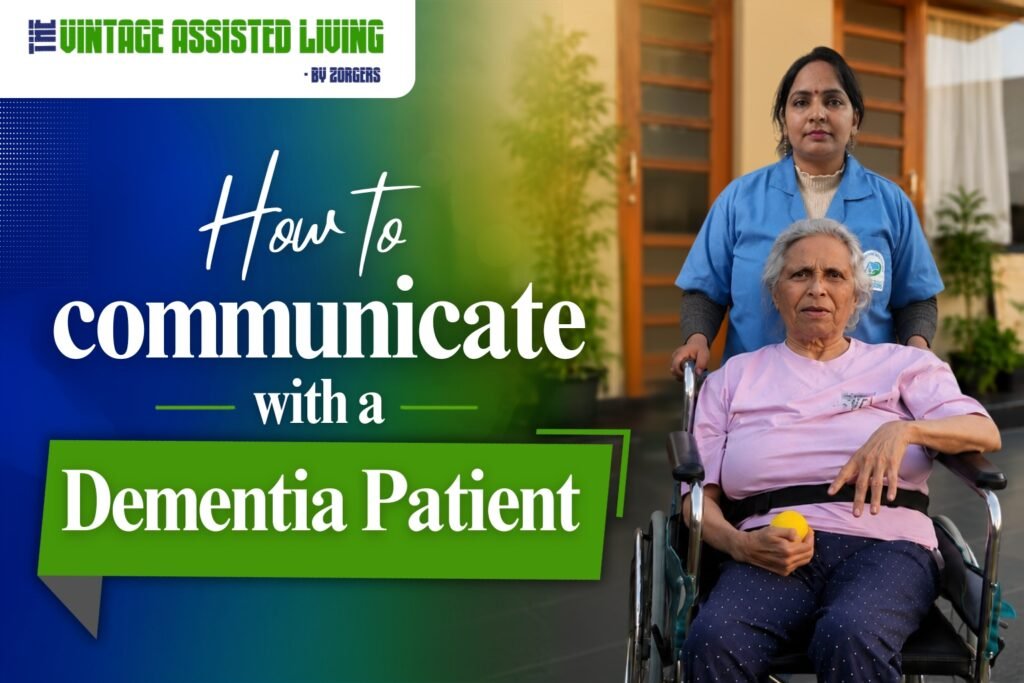
Talking to a loved one with dementia can feel like learning a new language — one where words matter less than tone, timing, and touch. Over years of caring for residents with dementia and Alzheimer’s, our team at The Vintage Club developed a simple, memorable framework to help families and caregivers communicate with confidence: the ACCAS Method.
ACCAS stands for Approach, Connect, Communicate Simply, Acknowledge, and Support. It’s a five-step approach designed to reduce confusion, ease agitation, and preserve the emotional bond between caregiver and patient — even as verbal communication becomes harder.
Why Standard Communication Doesn’t Work for Dementia Patients
As dementia progresses, patients often struggle with word-finding, following multi-step instructions, and processing fast or complex speech. Frustration on both sides is common — not because caregivers are doing something “wrong,” but because typical conversation patterns aren’t built for a changing brain.
The ACCAS Method reframes communication as a full-body, full-presence activity rather than just an exchange of words.
The ACCAS Method: A Step-by-Step Framework
A — Approach Calmly
Always approach from the front, within the patient’s field of vision, and at eye level. Sudden movements or speaking from behind can trigger fear or confusion. Slow your pace, soften your facial expression, and give a gentle verbal cue — such as saying their name — before starting a conversation.
C — Connect Before You Communicate
Before speaking, establish a physical and emotional connection. A light touch on the hand or shoulder (if welcomed), sustained eye contact, and a warm smile signal safety. This “connection first” step often determines whether the rest of the conversation goes smoothly.
C — Communicate Simply
Use short sentences with one idea at a time. Avoid open-ended questions like “What do you want to do today?” — instead offer simple choices: “Would you like tea or juice?” Speak slowly, use a calm tone, and allow extra time for the patient to process and respond.
A — Acknowledge Emotions, Not Just Words
Dementia patients may lose track of facts but retain emotional memory. If a patient seems upset, anxious, or repeats a concern, acknowledge the feeling rather than correcting the facts. Saying “I can see this is worrying you, I’m here” is often more effective than trying to reason or argue.
S — Support with Patience and Silence
Resist the urge to fill every pause. Silence gives the patient time to gather their thoughts. If they struggle to find a word, gently offer help only if they seem to want it. Ending each interaction with reassurance — a smile, a touch, a simple “I’ll be right here” — helps reduce anxiety after you leave.
Quick Reference: The ACCAS Method
A — Approach calmly, from the front
C — Connect through touch, eye contact, and presence
C — Communicate in short, simple sentences
A — Acknowledge emotions over facts
S — Support with patience and silence
How Professional Dementia Care Uses the ACCAS Method
At The Vintage Club’s dementia and Alzheimer’s care home, trained caregivers apply the ACCAS Method throughout daily routines — from mealtimes to medication reminders to family visits. Structured environments, consistent caregivers, and calm communication together create a sense of safety that reduces agitation and behavioral symptoms common in dementia care.
Families visiting residents are also guided on using the ACCAS Method, so that home visits feel comforting rather than disorienting for their loved one.
Frequently Asked Questions
What is the ACCAS Method?
The ACCAS Method is a five-step communication framework for interacting with dementia patients: Approach calmly, Connect before speaking, Communicate simply, Acknowledge emotions, and Support with patience.
Why do dementia patients get confused during conversations?
Dementia affects memory, word-finding, and the ability to process complex or fast speech, which can make standard conversation patterns confusing or overwhelming for the patient.
Should I correct a dementia patient if they say something factually wrong?
Generally, it’s better to acknowledge their emotion rather than correct facts. Arguing over details can increase distress without improving understanding.
How can family visits be less stressful for a dementia patient?
Using calm body language, simple sentences, and acknowledging feelings — as outlined in the ACCAS Method — helps family visits feel safe and comforting rather than confusing.
Does professional dementia care use structured communication techniques?
Yes. Trained caregivers at dedicated dementia care facilities, such as The Vintage Club, use structured communication approaches like the ACCAS Method as part of daily caregiving routines.

