
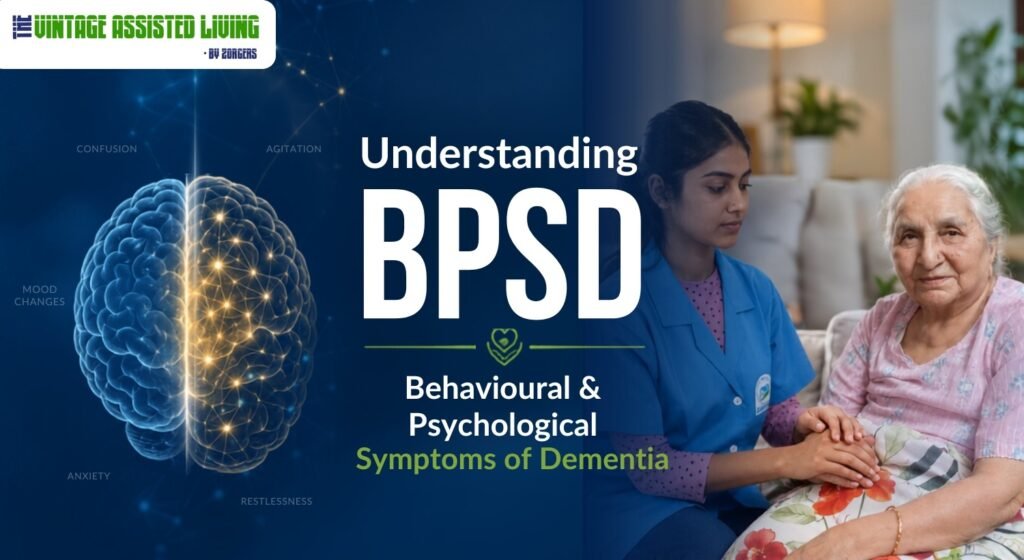
When we think of dementia, memory loss is usually the first thing that comes to mind. But memory decline is only part of the picture. Most dementia patients also go through a set of non-cognitive symptoms that affect their behaviour and emotional state collectively known as BPSD, or Behavioural and Psychological Symptoms of Dementia.
For families and caregivers, BPSD is often the hardest part of dementia care to manage not because it’s untreatable, but because it’s frequently misunderstood. Behind almost every “difficult” behaviour is an unmet need, a trigger, or a form of communication the patient can no longer express in words.
Quick Answer
BPSD (Behavioural and Psychological Symptoms of Dementia) refers to non-cognitive symptoms such as agitation, wandering, hallucinations, and mood swings that accompany memory decline in dementia. These symptoms are almost always triggered by one of five factors: communication difficulty, poorly matched activity, an unmet physical need, disrupted personal routine, or an unsuitable environment. Identifying and addressing the trigger, rather than the behaviour itself, is the foundation of person-centered dementia care.
In This Article
- What Is BPSD?
- What Triggers Improper Behaviour in Dementia Patients?
- 1. Communication
- 2. Activity
- 3. Unwell or Unmet Needs
- 4. Story Respecting Their Personal History
- 5. Environment
- Frequently Asked Questions
What Is BPSD?
BPSD refers to the range of behavioural and psychological symptoms that appear alongside the cognitive decline seen in dementia. These symptoms are grouped into two broad categories:
1. Behavioural Symptoms
- Disturbance in appetite
- Irregular sleeping and waking cycles
- Wandering
- Crying spells
- Excessive eating
- Aggressive behaviour
2. Psychological Symptoms
- Apathy and anxiety
- Hallucinations or delusions
- Depression
- Mood swings
These symptoms don’t appear randomly. They almost always have an underlying cause and identifying that cause is the key to person-centered dementia care.
What Triggers Improper Behaviour in Dementia Patients?
Caregivers who understand the common triggers behind BPSD are far better equipped to respond calmly and effectively, instead of reacting to the behaviour itself. Five major triggers are worth watching for:
- Communication – the patient is unable to express a need or situation clearly
- Activity – the current task or activity is poorly matched to their ability level
- Unwell or unmet needs – physical discomfort, pain, or an unaddressed need
- Story – routines, habits, or personal history that aren’t being respected
- Environment – surroundings that are unfamiliar, too loud, or poorly lit
Let’s look at each of these more closely.
1. Communication
Many behavioural symptoms stem from a simple but painful root cause: the patient is not able to communicate their needs, and is not able to fully understand what’s happening around them.
Principle of care: Treat the person with the same dignity as anyone else. Use clear, calm verbal communication alongside supportive non-verbal cues-tone of voice, facial expression, and gentle body language often communicate more than words at this stage.
2. Activity
Before introducing any activity for a dementia patient, caregivers should ask two questions:
- Is the activity too exciting or too boring for the patient right now?
- Is the task too challenging for their current cognitive and physical abilities?
An activity that’s mismatched in either direction overstimulating or understimulating can trigger agitation, frustration, or withdrawal.
3. Unwell or Unmet Needs
This is one of the most overlooked triggers, since dementia patients often cannot verbally report discomfort. Caregivers should routinely check for:
- Comfort: Is the person physically and emotionally at ease?
- Involvement: Are they getting enough participation and sense of purpose in daily life?
- Identity: Are their individuality, preferences, and personal history being respected?
- Medications: Could a side effect or medication change be affecting their behaviour?
- Fever or pain: Are there signs of illness or discomfort going unnoticed?
- Poor vision or hearing: Could a sensory impairment be adding to their confusion?
- Fatigue: Is the person overtired and in need of rest?
- Hunger or thirst: Are their nutritional and hydration needs fully met?
A behaviour that looks like “acting out” is very often the only way the patient has left to signal one of these unmet needs.
4. Story Respecting Their Personal History
Every dementia patient carries a lifetime of habits, routines, and preferences that shape how they respond to care. Paying attention to their “story” makes a real difference:
- Habits: Familiar patterns of behaviour they follow regularly
- Routines: Daily activities that bring structure and comfort
- Likes and dislikes: Preferences that make them feel happy or uncomfortable
- Life achievements: Accomplishments that define their sense of pride and identity
Caregivers who take the time to learn a patient’s personal story are usually able to prevent not just manage a large share of behavioural symptoms.
5. Environment
The physical environment plays a bigger role in dementia care than most families expect. Simple adjustments can meaningfully reduce agitation and confusion:
- Light levels: Ensure appropriate brightness for comfort both too dim and too harsh can cause distress
- Noise levels: Keep the environment calm and quiet wherever possible
- Unfamiliarity: Minimize sudden changes to their surroundings
- Signposting: Use clear, simple signs to help with navigation around the home
Why This Framework Matters for Home & Assisted Living Care
Understanding BPSD through these five lenses communication, activity, unwell/unmet needs, story, and environment shifts the caregiving approach from “managing bad behaviour” to “understanding an unmet need.” This is the foundation of person-centered dementia care, and it’s a principle we build every care plan around at Vintage Assisted Living.
For families who find BPSD symptoms increasingly difficult to manage at home, a structured, supervised environment like our dementia and Alzheimer’s care program can offer trained caregivers, a calm and consistent environment, and daily routines designed specifically around these five trigger categories.
Key Takeaways
- BPSD covers non-cognitive symptoms of dementia split into behavioural symptoms (wandering, appetite change, aggression) and psychological symptoms (anxiety, hallucinations, depression, mood swings).
- Difficult behaviour is almost always a signal, not random look for one of 5 triggers: communication, activity mismatch, unmet needs, disrupted personal story, or environment.
- Person-centered care means addressing the trigger behind the behaviour, not just managing the behaviour itself.
- Small environmental changes (light, noise, familiarity, signage) can meaningfully reduce agitation without medication.
Frequently Asked Questions
What does BPSD stand for?
BPSD stands for Behavioural and Psychological Symptoms of Dementia the non-cognitive symptoms that appear alongside memory and thinking decline in dementia patients.
What are examples of behavioural symptoms of dementia?
Common behavioural symptoms include appetite disturbance, irregular sleep-wake cycles, wandering, crying, excessive eating, and aggressive behaviour.
What are examples of psychological symptoms of dementia?
Psychological symptoms include apathy, anxiety, hallucinations or delusions, depression, and mood swings.
What usually triggers difficult behaviour in dementia patients?
Difficult behaviour is typically triggered by one of five factors: communication difficulties, poorly matched activities, unwell or unmet physical needs, disruption to personal routines and habits, or an unsuitable environment.
How can families reduce BPSD symptoms at home?
Families can reduce symptoms by maintaining consistent routines, respecting the patient’s personal history and preferences, checking regularly for unmet physical needs like hunger, pain, or fatigue, and keeping the home environment calm, well-lit, and free of sudden changes.

