
Quick Answer
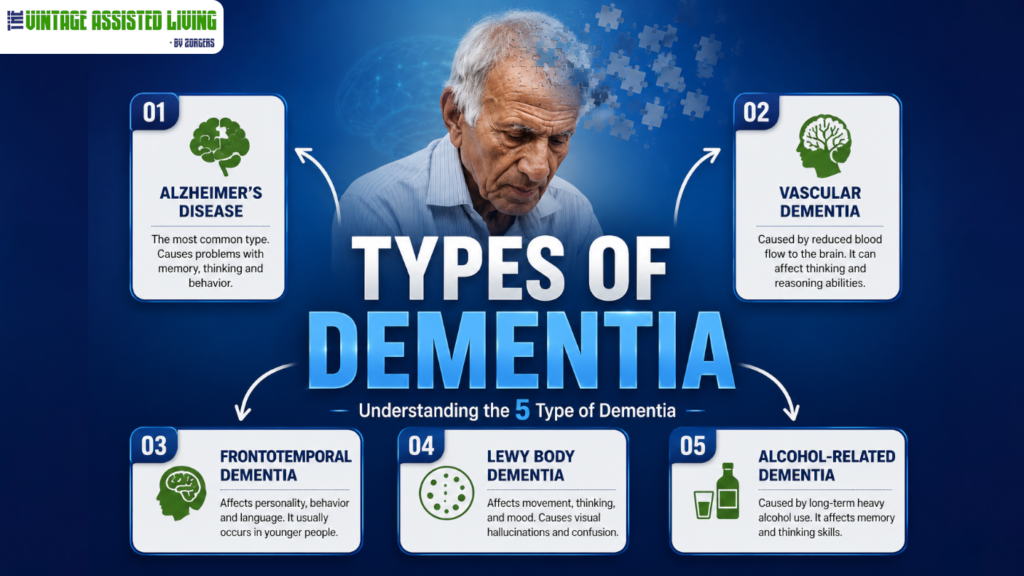
Dementia is not a single condition it includes several distinct types, each caused by different changes in the brain. The most common types are Alzheimer’s disease, vascular dementia, frontotemporal dementia, Lewy body dementia, and alcohol-related dementia. Each type has its own causes, early symptoms, and progression pattern, which is why an accurate diagnosis is essential for the right care plan.
Types of Dementia
Dementia is a broad term for a group of neurological conditions that affect memory, thinking, and daily functioning. While the symptoms can look similar on the surface, the underlying cause of each type is different and understanding this difference helps families and caregivers plan the right kind of support. The five most recognized types of dementia are:
- Alzheimer’s disease
- Vascular dementia
- Frontotemporal dementia
- Lewy body dementia
- Alcohol-related dementia
Alzheimer’s Disease
Alzheimer’s is the most common type of dementia, accounting for roughly two-thirds of all cases. It is a progressive, irreversible degenerative brain disorder, and its earliest symptom is usually memory loss. The risk increases significantly after the age of 65, and research shows that women have a higher risk than men.
Main Causes
- Amyloid plaques: Clusters that form between nerve cells and disrupt communication
- Neurofibrillary tangles: Twisted knots inside brain cells that eventually lead to cell death
Vascular Dementia
Vascular dementia is the second most common cause of dementia, making up about 20% of cases. It develops when blood supply to the brain is disrupted, either through reduced blood flow or tiny strokes that block small arteries sometimes called multi-infarct dementia.
Risk Factors
- Stroke (blockage in the brain’s blood vessels)
- High blood pressure
- High cholesterol
- Diabetes
Because vascular dementia is closely tied to stroke and blood flow issues, families managing this condition often also look into brain stroke rehabilitation care alongside memory support.
Frontotemporal Dementia
Frontotemporal dementia (FTD) is caused by degeneration of the frontal and temporal lobes of the brain, marked by abnormal tau protein deposits. Unlike Alzheimer’s, FTD is typically diagnosed at a younger age usually between 45 and 65 years.
Common Symptoms
- Inappropriate or anti-social behavior
- Lack of interest and repetitive behavior’s
- Poor judgment
- Decline in personal hygiene
- Changes in eating habits — often overeating or craving sweets and carbohydrates
- Attempting to eat non-food objects
- Difficulty with communication and speech impairment
Lewy Body Dementia
Lewy body dementia was first identified by German neurologist Dr. Friedreich Lewy. It is caused by abnormal protein deposits called Lewy bodies, made up of a protein known as alpha-synuclein, that build up in the brain. This type is commonly associated with Parkinson’s disease and shares several overlapping symptoms.
Common Symptoms
- Recurrent hallucinations
- Fluctuations in alertness and awareness
- Early motor or movement disturbances
- Tremors, rigidity, a shuffling gait, and a Parkinson-like appearance
Alcohol-Related Dementia
Alcohol-related dementia occurs due to brain damage caused by a lack of vitamin B1 (thiamine), which is essential for producing acetylcholine a neurotransmitter critical for normal brain function.
Common Symptoms
- Confusion
- Double vision
- Unsteady gait and difficulty walking
- Memory loss
- Hallucinations
Risk Factors for Dementia
While each type of dementia has its own specific causes, several risk factors increase the overall likelihood of developing dementia:
- Obesity
- High blood pressure
- High cholesterol
- Age over 65
- Smoking
- Stroke
- Head injury
- Lack of exercise
- Genetic or family history
- Diabetes
- Deficiency in vitamin B1, B12, or thyroid hormone
Understanding these risk factors is an important first step in recognizing symptoms early. To learn more about how dementia develops and affects brain function, read our guide on what dementia is and its early signs.
Frequently Asked Questions (FAQs)
What is the most common type of dementia?
Alzheimer’s disease is the most common type of dementia, accounting for roughly two-thirds of all cases. It is a progressive condition where memory loss is usually the earliest symptom.
What is the difference between Alzheimer’s and vascular dementia?
Alzheimer’s disease is caused by amyloid plaques and neurofibrillary tangles that gradually damage brain cells, while vascular dementia results from reduced blood flow to the brain, often due to strokes or blocked arteries. Both cause similar symptoms but have different underlying causes.
Is Lewy body dementia related to Parkinson’s disease?
Yes. Lewy body dementia is closely associated with Parkinson’s disease, and both conditions involve abnormal alpha-synuclein protein deposits in the brain. People with Lewy body dementia may also experience Parkinson’s-like symptoms such as tremors and rigidity.
Can alcohol consumption cause dementia?
Yes. Long-term heavy alcohol use can lead to alcohol-related dementia, caused by a deficiency in vitamin B1 (thiamine), which is essential for healthy brain function.
Get Expert Guidance for Dementia Care
Understanding the type of dementia your loved one is experiencing is the first step toward the right care plan. At The Vintage Assisted Living, Mohali, we provide compassionate Dementia & Alzheimer’s Care tailored to each individual’s needs, in a safe, secure, and engaging environment.
Schedule a personal tour today and discover how our specialized memory care program provides compassionate support, safety, dignity, and a better quality of life for seniors living with dementia.

